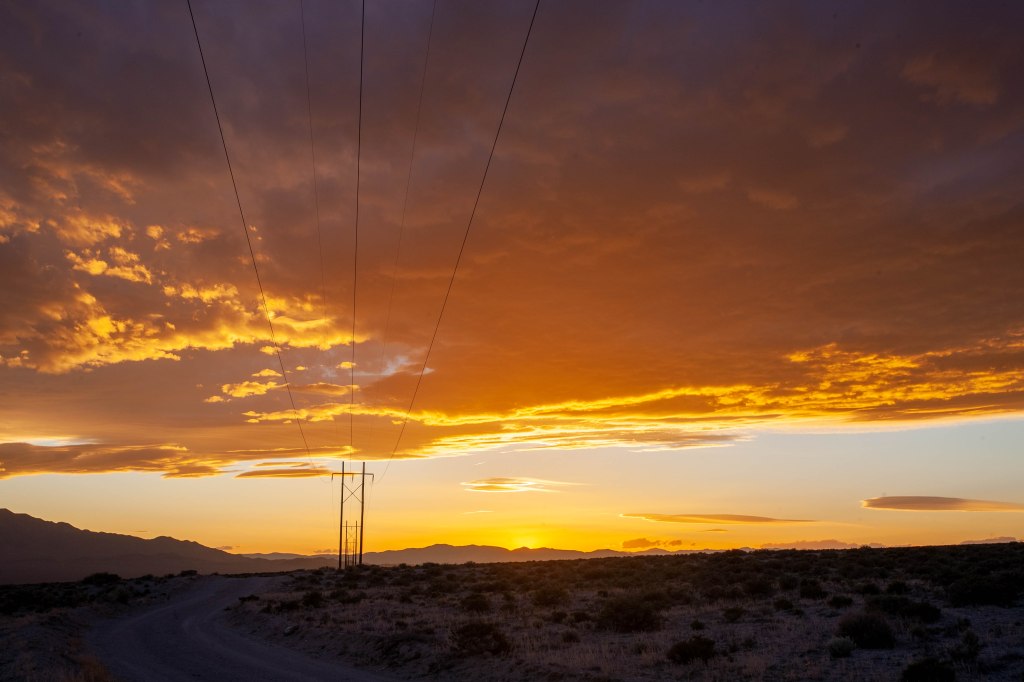
I’m staring out the window, absentmindedly spooning crunchy almond butter into my mouth as I wait for water to boil.
This will be my second coffee.
We’re parked on the side of a dirt road in Tonopah, Nevada, on Bureau of Land Management (BLM) land.
Beyond the beige sandy soil where clusters of small determined brush cling to life, lies Highway 95. I watch the commuters through the window. From where I’m standing, the semis and cars look like toys.
Beyond the highway, layers upon layers of treeless hills and mountains stack up against one another. Each row more faded than the last, until they blend with the dusty rose of sky.
Tonopah Nevada is, by all accounts, a pass-through town.
No one vacations here.
No one spends longer than it takes to gas up, pee, and select appropriate snacks for the next leg of the journey.
The only reason this town still exists (according to me) is it’s the only place to get gas for miles.
Its history lies in mining; the population steadily declining.
The town itself looks like it was created by a bunch of kids playing independently of one another in a sandbox:
You’ve got the girl with Disney princess dreams, lost in her creation of a mansion on a hill. She also managed to snag the only two trees available.
Below her, you’ve got a handful of boys making a mess with their trucks and excavators, digging up random piles and roadways.
Another kid wants to add a town, but due to budget cuts at the school, little figurines of buildings are limited.
Creative kid to the rescue! Armed with toothpicks, popsicle sticks, and a rich imagination he’s making little homes.
Hand painting signs.
And, he just got permission from the teacher to try out paper mâché’.
Then there’s the kid (there’s always that kid) who’s taking pleasure in knocking stuff down. Ripping the siding off a double-wide. Snapping up one of the homes and putting it on top of a gravel dirt mound. Trying to convince the creative kid that a clown motel is a great idea, “It will be world famous,” he declares.
“Let’s go check out the dirt roads,” says Chad.
I pour my coffee into a to-go cup, grab a banana – we had a choice of two bunches at the store, none ripe, all severely bruised. Like if they were people someone would have gone to jail – and heave myself into the truck.
It’s breezy and sunny, the pastel of early morning skies now blue.
I stare out over the vast expanse of desert. The wind picks up dust and blows it through the open window, and soon there’s a film coating everything, including my tongue.
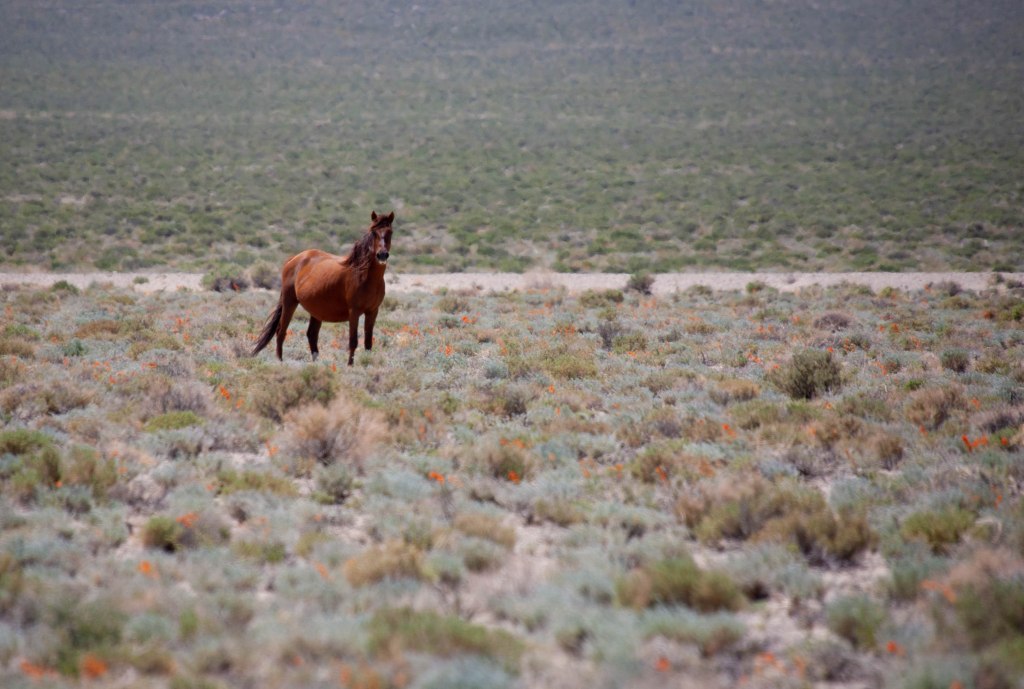
“Look, over there! Horses! Wild mustangs!”
The herd’s spotted us, too. Heads lifted; ears pricked as they stare. We stop, kill the engine, and meet their gaze. The breeze toys with their forelock, brushing it to the side. A tiny foal peeks around from behind the safety of its mother, and a few other mares look ready to drop theirs any day.
What do they eat? I wonder.
Google suggests grass, of which there is none.
One of them trots around in a circle, nodding its head.
Where do they find water?
Where do they huddle during the intense winds?
It’s fitting, that the act of working a horse so that it’s safe to ride is called “breaking.” They’re essentially “broken” of their spirit, taught to oblige the whims of humans in exchange for food and shelter.
I see movement out of the corner of my eye; two chestnut mustangs are galloping toward the rest. Their mane and tails stream behind, and they leave a cloud of dust in their wake.
These horses are not broken.

If you’ve ever driven through Nevada, noticed a dirt road that runs parallel to the freeway, one that continuously splits off and winds up into the hills, that’s where we are.
If you walk that path, you may see a squished 6-inch scorpion (we did).
Old rusty cans older than us, and probably you too. Shell casings. A pair of jeans that make you wonder, were they tie dyed with bleach, or the sun?
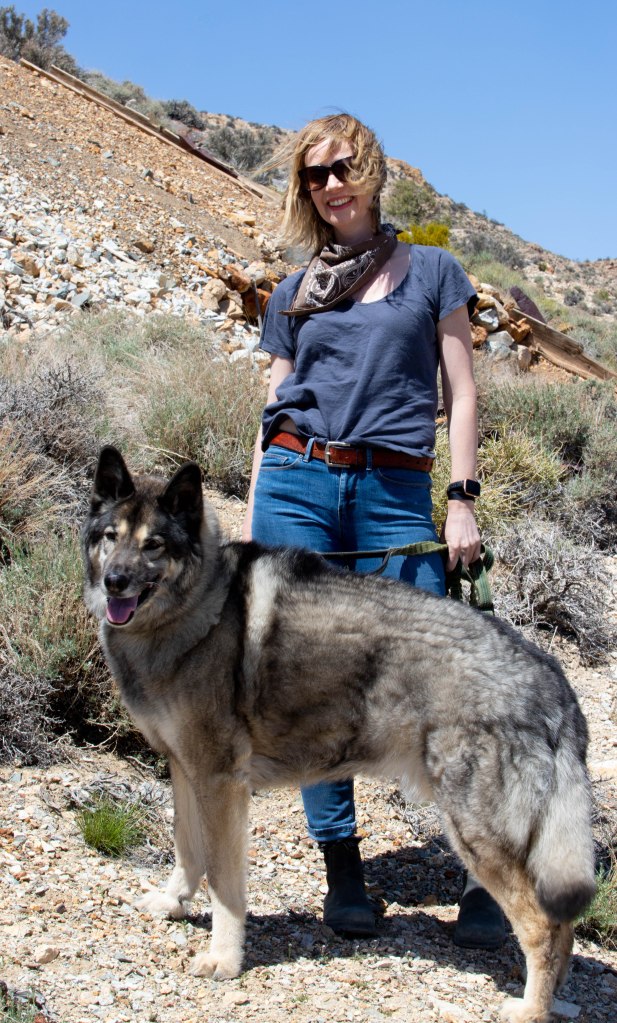
Further in the hills, you’ll find old mines with mining gadgets scattered at random.
A primitive hut made of stone, crude mortar mixed from the sandy soil, and a collapsed roof constructed with grey weathered tree limbs. Obviously brought over from somewhere else, since there are no trees here.
History is scattered all around, baking under a relentless high-desert sun, “like a time machine,” says Chad.
Most people are too busy to take the time to explore dusty back roads, and maybe that’s a good thing. Because when you’re out here, far away from everything, you get the sense that history is much closer.
Things are pretty much as they were.
There’s not much interference between the footsteps of those 100 years ago, and the ones you’re making now.




 TRAVEL & ADVENTURE